


ADAS Camera Calibration After Windscreen Replacement: Rules
- Posted on
- By Autoglas Concurrent
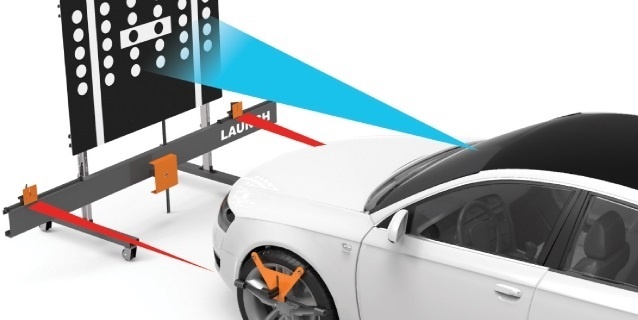
Is camera calibration mandatory after replacing the windscreen? Although it is not directly required by law under the Motor Insurance Liability Act. it is technically and insurance-wise essential for your safety.
Replacing a car's windscreen involves a lot of work. This is especially true for modern models, as many newer cars are equipped with numerous ADAS systems, which can operate thanks to the numerous sensors and the camera mounted behind the windscreen. If the camera isn't properly calibrated, it can negatively impact the ADAS systems, causing them to malfunction or not function at all. How exactly is camera calibration necessary after windscreen replacement, and can you skip this step when your car's windscreen needs replacing?
Go directly to:
- What are ADAS systems and how do they actually work?
- The importance of calibration for the operation of ADAS systems
- The Impact of ADAS: Facts and Figures
- How exactly does calibration work?
- Why is calibration necessary after replacing the windscreen?
- Choose an affordable windscreen and windscreen replacement including calibration
What are ADAS systems and how do they actually work?
ADAS stands for Advanced Driver Assistance System and is often referred to as "driving assistance system" or "driving assistance" in Dutch. It's a relatively modern technology in which cameras and sensors in and around the car assist the driver while driving, thus ensuring increased road safety. ADAS systems include traffic sign recognition (also available abroad), emergency braking systems, Lane Keeping Assist (warning and/or correction in the event of unintentional lane changes), and a system that intervenes when the driver shows signs of fatigue while driving.
This technology never stands still. New ADAS systems are constantly being added to make driving easier, more enjoyable, and safer. Existing systems are also being continuously improved, and in recent years, we've seen an increase in the number of sensors to deliver even better results in traffic.
But how does it all work? Without delving too deeply into the technical details, an average ADAS system works like this:
- The cameras, radar (front and rear of the car), lidar (in advanced systems) and sensors constantly collect information about what is happening outside the car.
- This information is sent to the ECU, an electronic control unit, which constantly makes calculations to detect risks and dangers in a timely manner.
- Based on the calculation, the ADAS system issues a warning or the computer decides to intervene itself and then performs an action (such as emergency braking).
The importance of calibration for the operation of ADAS systems
Correct intervention or warning requires a correct ECU calculation. Correct ECU calculation requires the correct information, meaning that the sensors, radar systems, and the camera play a major role in the functioning of the ADAS systems. This is where calibration comes into play, because only with the correct alignment of the sensors and correct calibration of the camera can the correct data be sent to the ECU, which then warns or intervenes in the most effective way. If the camera is positioned slightly off-axis, this can result in an incorrect ADAS system intervention, or the warning or intervention comes too late, and an accident has already occurred.
The Impact of ADAS: Facts and Figures
- A camera misaligned by just a fraction of an inch can be significantly off 50 meters away (source).
- Lane Departure Warning (LDW) reduces single-vehicle, side-impact and frontal collisions by 11% and injury accidents by 21% (source).
- The use of Autonomous Emergency Braking (AEB) can reduce the number of rear-end collisions by 45%, and in combination with Forward Collision Warnings (FCW) by as much as 55% (source).
These figures show that calibration is not only a technical necessity, but also a crucial contribution to road safety.
How exactly does calibration work?
When calibrating the camera, the vehicle data is first read. This is a diagnostic report based on OBD ( On-Board Diagnostics ). Next, the correct calibration setup is installed, and the camera is then calibrated using software and tools (specific to the make and model). After a test drive and inspection, the camera is calibrated again, and the ADAS systems are functioning properly again.
The time and cost of this process depend on the model and the situation. It's usually completed within an hour.
Why is calibration necessary after replacing the windscreen?
If the windscreen is replaced carefully and the camera's position is taken into account, the likelihood of significant deviations that would make calibration essential is small. In most cases, this involves a very minor change that will have little impact on your ADAS systems. However, this does mean that a change can occur that, in some cases, could lead to a (fatal) accident on the road. If today's drivers want to be able to rely on their ADAS systems without worry, it's crucial that they function flawlessly. Therefore, calibration is necessary after replacing the windscreen.
There's also an insurance issue we need to address. Currently, no Dutch car insurers explicitly deny coverage in their policies for incorrect camera calibration or the lack of calibration when replacing a windscreen. However, most policies do state that "the insured is obligated to keep the car in good condition and to have defects repaired immediately if this could affect safety." Having the camera calibrated naturally falls under this provision. This doesn't mean the insurer will deny the claim outright, but it does mean the insurance company can do so.
Even if you're not convinced of the benefits of calibration after windscreen replacement, it's wise to do so. Not only will you be able to rely on your ADAS systems, but also because you'll be sure you won't have any insurance issues in the event of an accident after replacing your windscreen.
Choose an affordable windscreen and windscreen replacement including calibration
Do you need your car's windscreenreplaced and don't want to overpay, but still want the best quality, camera calibration, and optimal ordering convenience? Then you've come to the right place. Our replacement windscreens are identical in quality to the original car glass, but the price is considerably lower. Thanks to our professional installation partners, we can also always offer on-site windscreen replacement . You will need to visit the workshop for camera calibration, but this can always be done afterwards. Want to learn more about the options or our working methods? Please contact us so we can personally assist you.